Kaya delme kulesi iyonu: Hidrolik ve pnömatik — 8 göstergenin karşılaştırılması ve bir iyon kılavuzu
Rock drilling rigs are core equipment for mining, tunnel construction and other civil works; their performance directly determines construction efficiency, operational safety and total cost. The industry’s mainstream rigs fall into two categories — hydraulic rigs and pneumatic (air-powered) rigs. The fundamental differences in operating principle create a series of distinctions in performance, operator experience and lifecycle cost. This article compares the two types across three dimensions (core performance, practical features, and total cost) and forecasts industry trends.
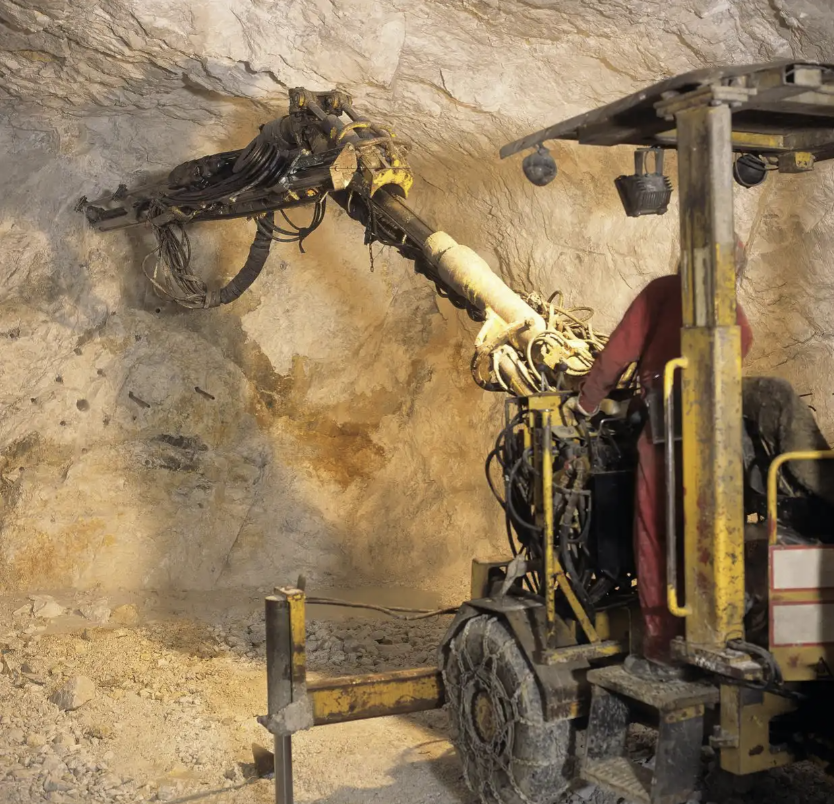
I. Core performance — the essential gaps in efficiency and capability Core performance determines operational efficiency and breakthrough capability. It is mainly reflected in three key indicators: working pressure, impact frequency and energy efficiency — the most important differences between the two types.
Working pressure: hydraulic rigs’ absolute advantage Working pressure is the core parameter determining impact energy. Pneumatic rigs are limited by the characteristics of compressed air: typical working pressures are only (5–7)×10^5 Pa, and it is difficult to raise them further — preparing high-pressure air has thermal efficiency below 30%, and long-distance air transmission loses over 50% of energy due to flow resistance. Hydraulic rigs use incompressible hydraulic oil and overcome this limit: working pressure can reach (30–250)×10^5 Pa, with common operating pressure around 1.4×10^7 Pa (140×10^5 Pa), more than 20 times that of pneumatic units. With similar piston effective areas, hydraulic rigs can increase impact energy by an order of magnitude; to achieve the same impact energy their piston cross-section can be reduced to about 1/20 of pneumatic units, enabling smaller, lighter equipment designs.
Impact frequency: a leap in high-frequency operation Impact frequency together with impact energy determines output power. Pneumatic rigs typically operate at 25–40 Hz and are affected by air pulsation, reducing stability at high frequencies. Hydraulic rigs benefit from precise hydraulic control, achieving 33–155 Hz, with maximum values approaching four times those of pneumatic rigs and stable output across the whole frequency range. The combination of higher pressure and higher frequency gives hydraulic rigs 3–5 times the output power of pneumatic rigs; in hard-rock drilling scenarios penetration rates can be more than doubled, significantly shortening construction schedules.
Energy efficiency: threefold energy value Energy efficiency directly ties to operating cost. For pneumatic rigs the efficiency chain is “air compressor input power → rig output power,” with large losses throughout, yielding a system efficiency of only about 10%. For hydraulic rigs the chain is “hydraulic pump input power → rig output power,” with losses concentrated in pumps and piping; overall efficiency can reach about 30%, roughly three times that of pneumatic rigs. Assuming an 8-hour workday and electricity at 1 RMB/kWh, a hydraulic rig can save over 1,000 RMB per day for the same drilling workload, making long-term economic benefits highly significant.
II. Practical features — divergent adaptability and operator experience Practical features reflect a machine’s adaptability to varied working conditions and the operator experience. Four dimensions matter most: operational adaptability, environmental friendliness, power transmission and operating temperature — all of which affect construction quality and worker health.
Operational adaptability: precise control vs fixed parameters Field conditions vary widely — rock hardness (soft to hard), blasthole diameters (30–150 mm), drill rod lengths (1–10 m) and more. Hydraulic rigs can adjust oil pressure and flow to precisely control impact frequency (33–155 Hz), rotation speed (0–300 rpm), impact energy (100–1000 J) and torque (100–1000 N·m), rapidly matching optimal working conditions. Pneumatic rigs are limited by compressed air pressure and flow and cannot be freely tuned; in variable conditions they must often operate with fixed settings, which reduces penetration efficiency at best and causes drill-rod failures or hole deviation at worst.
Environmental friendliness: cleaner and more comfortable vs noisy and polluting Working environment affects operator health and safety, and the differences are stark:
Noise: pneumatic rigs’ exhaust noise can reach 110–130 dB, well above the 85 dB safety threshold, making them a severe source of auditory pollution in confined spaces like tunnels. Hydraulic rigs have no exhaust noise and running noise of only 70–85 dB; ordinary ear protection is sufficient.
Air pollution: pneumatic exhaust forms a wet mist that contains mineral oil particles, reducing visibility and fouling air; long-term inhalation risks respiratory disease. Hydraulic rigs use closed oil circuits and emit no exhaust, keeping the working face air much cleaner.
Dust control: both types benefit from wet-drilling measures to control dust, but hydraulic rigs can more effectively integrate high-pressure water systems for superior dust suppression. With a soundproof cabin, hydraulic rig cabin noise can fall below 60 dB, allowing normal conversation.
Power transmission: local power vs long-distance delivery Power transmission affects layout flexibility:
Hydraulic rigs: hydraulic oil is not suitable for long-distance transmission (significant pressure loss beyond ~50 m), so a nearby power source is required — either an onboard combustion engine driving a pump or electrical connection to a nearby power unit. This concentrates equipment near the working face but gives faster power response.
Pneumatic rigs: compressed air can be delivered over long distances (often exceeding 1,000 m), allowing compressors to be located away from the workface in safer areas. This makes the workface layout cleaner and is especially suitable for long tunnels and deep shafts.
Operating temperature: cooling vs heating scenarios Operating temperature has a major impact in confined-space construction: pneumatic rigs’ exhaust air expands and cools, lowering the workface temperature by about 3–5°C, which helps in hot underground conditions. Hydraulic rigs’ oil circuits and power sources (especially combustion engines) generate substantial heat, raising the workface temperature by 5–10°C; this requires stronger ventilation design and management of engine exhaust pollution.
III. Total cost — tradeoffs between upfront investment and long-term operation Total cost includes initial purchase and long-term operating & maintenance costs. The pattern is “pneumatic favored short-term, hydraulic more economical long-term.”
Lifecycle cost example: for a hard-rock drilling scenario with 8 hours/day and 300 days/year, hydraulic rigs have higher initial purchase cost but, thanks to three times the energy efficiency (annual electricity savings of roughly 300,000 RMB) and twice the drilling efficiency (annual project output increase around 2,000,000 RMB), the purchase premium is typically recovered within 1–2 years. Pneumatic rigs have lower initial cost but higher energy consumption and lower efficiency, producing much higher long-term operating costs: total 5-year lifecycle cost is about 1.8 times that of hydraulic rigs.
Industry outlook and selection guide Ongoing hydraulic-technology iterations (high-pressure sealing, intelligent control systems) and expected mass-production scale-up (projected fivefold output increase over the next three years) should reduce hydraulic rig purchase prices by more than 40% and simplify maintenance through modular designs. Over time hydraulic rigs are likely to become the mainstream choice in mining, tunneling and major infrastructure drilling.
Selection guide (concise):
Choose hydraulic rigs when: working in hard rock, requiring high penetration and productivity, prioritizing long-term operating cost savings, needing precise control over impact/rotation parameters, or working in environments where noise and exhaust must be minimized.
Choose pneumatic rigs when: initial capital is constrained, work is short-term or occasional, compressors and long compressed-air supply lines are already available (e.g., very long tunnels or deep shafts where remote compressor placement is advantageous), or cooling of the workface by exhaust expansion is beneficial in extremely hot environments.
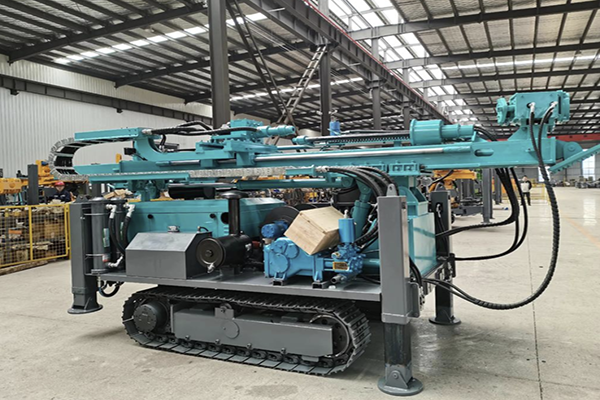
Summary Hydraulic and pneumatic rock drilling rigs each have their own strengths. Pneumatic rigs offer lower upfront cost and advantages in very long-distance compressed-air layouts, while hydraulic rigs offer far superior performance (higher pressure and frequency), better energy efficiency, better working-environment characteristics and ultimately lower lifecycle cost. For most mainstream hard-rock and high-productivity projects, hydraulic rigs are becoming the recommended option.